The water we use daily does not have the same composition from one region to another. In Switzerland, for example, water hardness varies by municipality.
Understanding your hardness level is essential, especially to preserve your appliances and optimize their performance. Here’s everything you need to know about water hardness and the importance of the regeneration salt setting in your dishwasher.
Water hardness
What is it?
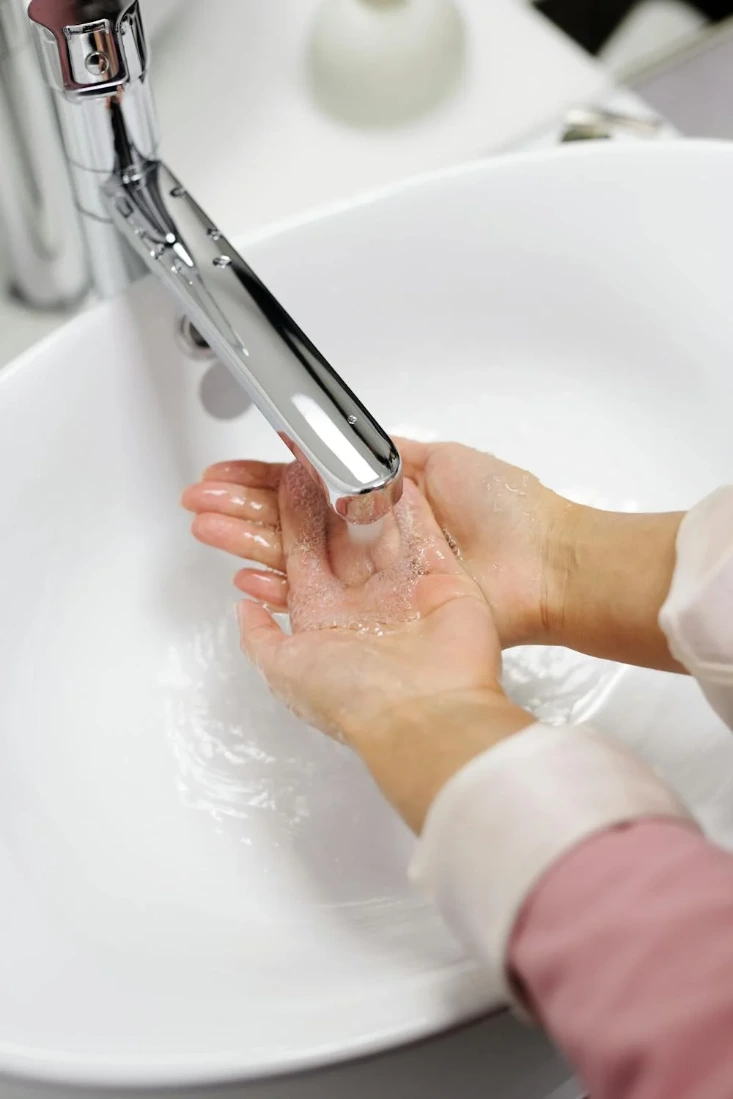
Water hardness is determined by its concentration of minerals, primarily calcium and magnesium. Hard water contains a high amount of these minerals, while soft water contains little.
Hardness degrees can be expressed in different units:
- French (°fH) : 1°fH = 10 mg/L of calcium carbonate
- German (°dH) : 1°dH = 1.78 mg/L of calcium carbonate
- English (°e) : 1°e = 1.43 mg/L of calcium carbonate
If you want to know the hardness of the water in your municipality in Switzerland, you can use the drinking water quality search engine proposed by the SSIGE (Swiss Gas and Water Industry Association).
How to test the hardness of water at home?
If you want to check the hardness of your water at home, there are two simple methods:
- Test strips : Dip them in a glass of water and compare the resulting color with the provided scale.
- The chemical reagent : Add a few drops of the product to your water sample; a color change will indicate the hardness.
👉 Tip : Before performing a test, let the cold water run from the tap for 5 minutes to get a more accurate measurement.
The regeneration salt
If your dishwasher is equipped with a water softening system, it requires regeneration salt to function properly. This salt prevents the formation of limescale deposits that can harm your appliance's performance and leave marks on your dishes.
If you have a water softener (central demineralization system in your home), the water is already softened. In this case, it is unnecessary to add regeneration salt to your dishwasher.
How to properly adjust the regeneration salt in your dishwasher?
📌 Key steps:
- Check the manufacturer's recommendations in your dishwasher's manual.
- Only use fine regeneration salt : it dissolves better and protects your appliance from residues.
- Avoid adding other products in the salt compartment (no table salt, detergent, or rinse aid).
First use :
- Fill the salt reservoir with water.
- Add 1 kg of salt.
- Immediately start a wash cycle to avoid stagnant deposits.
- Start a first wash with the hottest program (intensive mode) to properly activate the softening system.
🚨 Attention ! Never leave stagnant salt in the reservoir, as it can damage your dishwasher.
Why manage water hardness well?
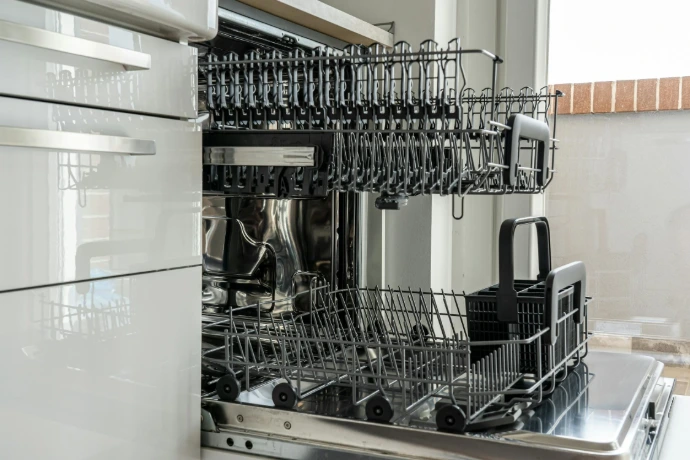
✔️ Extends the lifespan of your appliances by avoiding limescale deposits.
✔️ Improves the efficiency of the dishwasher, reducing detergent consumption.
✔️ Prevents white marks and deposits on dishes and glasses.
By following these tips, you will optimize the operation of your dishwasher and extend its lifespan while saving salt and detergent. 🌿💦